Thursday, October 26, 2023

OU Professor Mohammed Atiquzzaman Receives Award for Outstanding Open Access Publication

Mohammed Atiquzzaman, the Edith Kinney Gaylord Presidential Professor and Hitachi Chair in the OU School of Computer Science, was recognized by the OU Libraries Open Access Awards for having the Most Cited OA Funded Publication.

The award was presented at the OU Bizzell Library as part of the University Libraries' 10-year anniversary celebration of their Open Access program.

"I feel honored to have received this award," shared Professor Atiquzzaman, "Thanks a lot to OU Libraries for the financial support to publish my paper in an Open Access journal, which has resulted in a large number of citations in a short period of time.”

Atiquzzaman's recognition was well-deserved. His Open Access-funded work titled Routing in Flying Ad Hoc Networks: Survey, Constraints, and Future Challenge Perspectives, published in 2019, has garnered an impressive 219 citations through June 2023, making him the most frequently cited OU-affiliated author. This achievement not only highlights the quality of his research but also underscores the impact of Open Access in disseminating knowledge to a broader audience.

The award ceremony took place in October during International Open Access Week, emphasizing the global importance of open access to research and scholarship. The event, held on Oct. 24 in the OU Bizzell Library, served as a moment to reflect on a decade of supporting open access initiatives and to celebrate the valuable contributions of individuals like Professor Atiquzzaman to the academic community.

The University Libraries' Open Access program plays a crucial role in supporting researchers like Atiquzzaman, providing them with the resources needed to publish their work in Open Access journals. It's a testament to the power of Open Access in making scholarly research accessible to a wider audience and fostering collaboration among scholars worldwide.

Thursday, September 28, 2023

AI2ES Director Represents Institute, OU On Capitol Hill

Amy McGovern (left) and Kara Sulia (right).
 Amy McGovern, Lloyd G. and Joyce Austin Presidential Professor in the School of Meteorology and School of Computer Science at the University of Oklahoma, traveled to Capitol Hill to present the work of the NSF AI Institute for Research on Trustworthy AI in Weather, Climate, and Coastal Oceanography (AI2ES) to the National Science Foundation and to members of Congress on Sept. 18-19, 2023. McGovern, who is the director of AI2ES, was joined by Kara Sulia, an AI2ES member from the University of Albany. 

This event, dubbed “AI on the Hill,” included directors and members of each of the 25 NSF-funded AI institutes.

“The goal was to showcase the amazing breadth and depth of the work being done in AI across the nation,” McGovern said. 

NSF has funded 25 separate AI institutes cumulatively since 2020. AI2ES was one of the first seven institutes, and each year, NSF has sponsored approximately 7-10 more. The impact of the institutes can be seen across all aspects of society, including agriculture, healthcare, privacy, education, and more. In total, NSF has invested half a billion dollars in the AI institutes nationwide.  

During the event, McGovern and Sulia highlighted AI2ES’s groundbreaking research in developing novel AI methods for a wide variety of weather and climate applications. 

“We focused on impactful weather across the nation, with hands-on demos of severe weather, tropical cyclones, and winter weather,” McGovern said. “We had non-stop visitors from a variety of congressional offices, including staffers from both senators and representatives as well as people from other government agencies.” 

Learn more about AI2ES at https://www.ai2es.org/

Thursday, May 11, 2023

Atiquzzaman Honored with Hitachi Ltd. Chair in Computer Science

Mohammed Atiquzzaman, Ph.D. and professor in the OU School of Computer Science, has been awarded the Hitachi Ltd. Chair in Computer Science. A committee comprised of peers reviewed Atiquzzaman's career accomplishments and made the determination that he met the criteria for this distinction.

According to the criteria of the chair, Atiquizzaman has attained the following achievements:

  1. a national reputation for research excellence and superior teaching skills in the field of computer science;
  2. outstanding professional or academic stature and level of personal energy and interest which help attract and develop exceptional students to become tomorrow’s teachers and future leaders in computer science;
  3. devotion primarily to teaching and research activities in the College of Engineering;
  4. the ability and experience to work with business and professional leaders of Oklahoma and the nation beyond the academic realm; and expectancy to make a high-level professional contribution for a substantial future period of time.

Wednesday, May 10, 2023

AI Research conducted by Amy McGovern and Team Recognized in The New York Times and CBS News This Morning


The airline industry is turning to artificial intelligence (AI) to help improve the flying experience by navigating smoother and safer flights.

Amy McGovern, Ph.D., a professor in both Computer Science - University of Oklahoma and the School of Meteorology, is the director of the NSF AI Institute for Research on Trustworthy AI in Weather, Climate, and Coastal Oceanography. She was interviewed on CBS News This Morning by anchors Vladimir Duthiers and Anne-Marie Green discussing how her institute's research is using artificial intelligence in hopes of improving flying experiences, possibly alleviating flying headaches, such as turbulence, for passengers. View CBS News interview.

The New York Times also featured a story titled "Sick of Bumpy, Delayed Flights? New Weather Tech Could Help" that cites McGovern and her expertise in AI used in weather. View The New York Times article. Please note that unless you are a subscriber, you will not be able to view the article.


Wednesday, March 1, 2023

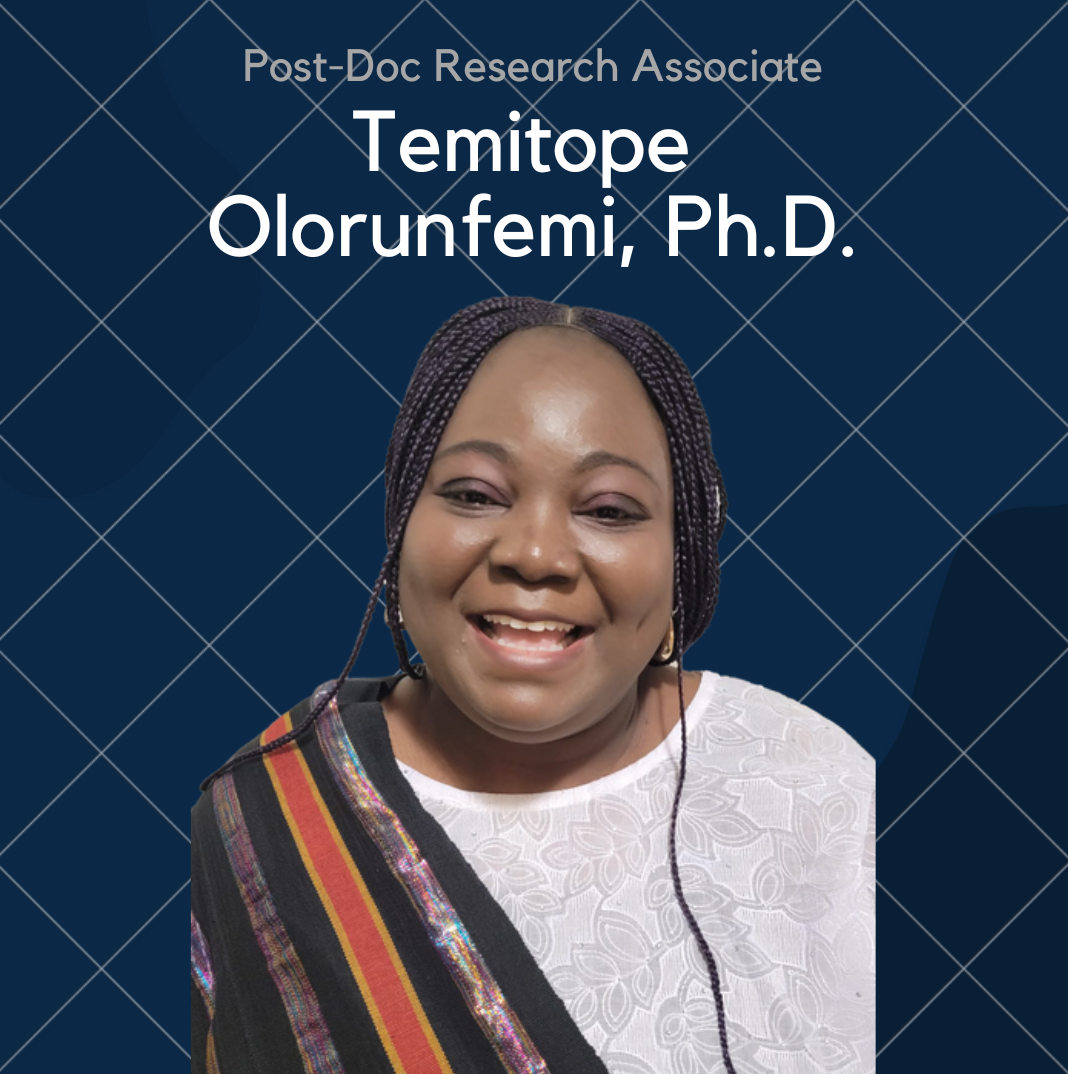
Profile: Temitope Olorunfemi, Ph.D. Shares Her Academic Journey and Passion


I come from Oyo State in the Southwestern part of Nigeria. I was born to parents I won’t call strict but principled. As the second child of four children, the responsibility lies on me to take care of my younger siblings and advise my elder sister on life issues.

I grew up to appreciate the prestige, dignity, and honor that go with the teaching profession since my both parents are in the teaching profession. Although they do not make as much money as those working in industry, they are contented with making life by ensuring that other people’s children are trained both academically and morally.

I also found my way into the academic world. Being a resilient person, I wrote my university entrance examination three times, which meant three years of waiting, before I was able gain admission to the university; however, I never allowed discouragement to set in despite these multiple attempts. My philosophies of life have always been, “to every problem (or challenge) there is a solution” and “tell the truth always, you will never need to remember what you have said.” I have always believed that the best person I could be in life is to be myself and the only person I am in constant competition with is myself, to see a better version of me regardless of the challenges around me.

These experiences and philosophies went a long way in establishing my person and building my character, which of course strengthened my relationship with people regardless of their race, ethnicity, gender, age, religion, language, abilities/disabilities, sexual orientation, socioeconomic status, or country of origin. This propelled me to apply for a post-doctoral fellowship in the highly competitive American Association of University Women. I am more than grateful for the mentorship I am receiving at the University of Oklahoma through Prof. Hougen of the School of Computer Science. OU has helped me drastically to shape my career in Science, Technology Engineering, and Mathematics (STEM). My past experiences at OU served as a driving force that motivated me to encourage a group of women to begin or forge ahead in their careers in STEM. We meet biweekly online to discuss their careers in STEM. I started with 7 women in 2021 and they are now 13 in number.

In 2012, I joined a Non-Governmental Organization, Women in Technology, where we go to rural areas of Southwestern Nigeria to educate Women leaders on the importance of computers and how to make use of them for socio-economic development. These women are invited to seminars, open discussions, and workshops, where they are being educated on the importance of technology to our fast-growing world and how they can fit in their own way. They in turn go back to their rural communities and educate women at the grassroots level, teaching them what they have been taught. We also check on them to see how they are progressing to help ensure success. It was during one of these trips to these counties that I got the inspiration and passion to reach out to these women and girls. I just knew that if the opportunity was given to these women to be educated, many of them will be better placed. Then I took it upon myself to interact with some of them one-on-one. It was during my discussion with most of these women that I realized how intelligent they are and with just a little push, they can become a better version of themselves.

Out of the passion I have for the women and girls, particularly in the rural arears of Southwestern Nigeria, I am currently working on the project Development of an Automated Dialogue System for Cervical Cancer Risk Awareness and Estimation for Women and Girls in English, Yoruba, and Spanish Languages. I am working with a research team which is being supervised by Prof. Hougen. When information on cervical cancer risk estimation and awareness is communicated with these women and girls in their own languages, it can go a long way in preserving their lives and that of a community since they will have a better understanding of the concepts and their associated risk. Being aware of any signs and symptoms of cervical cancer can also help avoid delays in diagnosis. Early detection of the disease allows for quicker action and for saving precious time. Early detection greatly improves the chances of successful treatment, thereby reducing the negative effect of this disease on the socio-economic value of the country. This will enable these women to participate or contribute meaningfully to the economic development of their community and the country as whole.  

In future, with the assistance of my STEM group, I will educate rural women leaders on the importance to us as women of computer systems as scientific tools in STEM. This will enable them to sensitize other women to go for adult education in STEM. I will also do a “catch them young program” for girls both in primary and secondary school. In this program, they will be educated and enlightened on the importance of their meaningful contributions to STEM. In addition, there will be platforms whereby rural women and girls will be gathered to speak their minds as regards the challenges they are facing as far as cervical cancer and STEM are concerned. Solutions will be proffered and where necessary concerned authorities will be informed.

In Nigeria, according to the National Bureau of Statistics, women make up on average just 22% of the total number of Engineering and Technology university graduates each year. Although the participation of women in higher education has increased, they are still underrepresented. Women are confronted with various challenges while pursuing their careers, in particular, due to socio-cultural factors, including religious and cultural fundamentalism, as well as work-family conflict and societal bias towards women, etc. Many people do not see the need for women to go to school. They believe they will end up in their husband’s kitchen. Balancing family life and personal relationships while achieving a successful career in science is a major challenge for women. The challenges of childcare and the demands of running a research laboratory are often seen as incompatible. Women who plan to have children in the future drop out of the academic research race at twice the rate of men. Women are hard hit with family responsibilities just when they need to meet research goals. This is, however, the result of gender disparities in education. Despite efforts made to close this gap, STEM fields are still lagging behind.

As a typical African woman, achieving these goals could be challenging but not impossible. With constant competition with oneself, one will be able to achieve a better version of oneself. 

Monday, October 3, 2022

Dr. Mohammad Atiquzzaman Presents IEEE Distinguished Lecture Tour

As part of the Distinguished Lecture Program of the IEEE Communication's Society, OU Professor Mohamed Atiquzzaman will embark on a series of lectures and networking events to Austin, Dallas, Atlanta, and Huntsville during the week of October 3-7, 2022.


Monday, April 11, 2022

OU Team Collaborates with Universidad Nacional de San Agustin (UNSA) in Peru

From April 3 to 8, Dean Hougen, Associate Professor and Associate Director of the School of Computer Science, traveled with seven OU colleagues to Arequipa, Peru to meet with administrators, faculty, staff, and students of the Universidad Nacional de San Agustín (UNSA) as part of a collaborative project between OU and UNSA to establish the Integrated Center for Monitoring and Control of Public Health (CMCPH) in the Arequipa region, which is focused on public health issues such as COVID-19 and other communicable diseases. This visit also brought to light other pressing health concerns for the people of Arequipa including diabetes, rabies transmission among canines, and negative health impacts from mining the mountains of the region.

Along with Prof Hougen, the interdisciplinary team from OU traveling to Peru consisted of David Ebert, Associate Vice President for Research and Partnerships, Director of the Data Institute for Societal Challenges (DISC), and Professor of Computer Science and Electrical & Computer Engineering; Hank Jenkins-Smith, Co-Director of the National Institute for Risk and Resilience (NIRR) and Professor of Political Science; Aaron Wendelboe, Professor and Edward E. & Helen T. Bartlett Chair of Biostatistics & Epidemiology; Charles “Charlie” Kenney, Director of the Center for the Americas and Associate Professor of Political Science; Charles Nicholson, Associate Professor of Industrial and Systems Engineering; Andrés González, Assistant Professor of Industrial and Systems Engineering; and Victor Maqque, Operations Manager for the Latin American Sustainability Initiative (LASI) at OU.

While in Peru, the team met extensively with UNSA representatives including UNSA President Hugo Rojas Flores; Vice President for Research Henry G. Polanco Cornejo; and Jesús Silva Fernández, Professor of Production and Services Engineering and UNSA principal investigator for the project, numerous other faculty and students, and public health officials including Dr. Carlos Cuya Mamani, Executive Director of the Arequipa–Caylloma Health Network. They also traveled to Quequeña, Peru to see better understand the operation of regional clinics and their roles in their communities. This effort is part of a larger group of collaborative efforts between OU and UNSA to establish the Arequipa Research Institute for Global Change and Human Health.

See also:

Tuesday, January 4, 2022

Dimitris Diochnos Serves as NSF AI2ES Senior Personnel

Dimitris Diochnos is Senior Personnel at the NSF AI Institute for Research on Trustworthy AI in Weather, Climate, and Coastal Oceanography (AI2ES). The lead PI in the project is Amy McGovern (OU) and the institute is funded for approximately 20 million dollars over 5 years, in order to make significant advances in foundational and applied AI research. Dimitris is working on foundational issues related to robustness and reliability of machine learning algorithms that have applications to environmental sciences. In this one and a half year that the institute is running, Dimitris had two papers in top AI conferences, one of which was based on work done with Conner Flansburg, an undergraduate student at OU, who participated in the REU (Research Experiences for Undergraduates) of 2021 in terms of the AI2ES institute. The work of the institute was also presented in the recent AGU (American Geophysical Union) meeting that was held in December of 2021, where Dimitris's work on robust AI was also highlighted --

View clip: https://www.youtube.com/watch?v=yNFu4LXxLqQ
AI2ES Institute: https://www.ai2es.org

Tuesday, December 7, 2021

David Ebert Elected to IEEE Computer Society

Congratulations to Dr. David S. Ebert, Associate Vice President for Research and Partnerships, Gallogly Chair Professor of Electrical and Computer Engineering, Professor of Computer Science, and the Director of the Data Institute for Societal Challenges, as he was recently elected second vice president of the IEEE Computer Society.

The IEEE Computer Society advances the theory, design, practice and application of computer and information-processing science and technology, as well as the professional standing of its members.

Thursday, November 25, 2021

Dr. Deborah Trytten Awarded NSF Grant That Includes Scholarship Support to 23 Students

Deborah Trytten, Ph.D., a computer science professor, is leading an OU research team focused on creating pathways to STEM disciplines for students with demonstrated financial need. Funded by the National Science Foundation, the project will support scholarships to 23 full-time students who are pursuing bachelor’s degrees in computer science and interested in building Tribal Nations. The team includes Dean Hougen, Ph.D., associate professor in the School of Computer Science, and Randa Shehab, Ph.D., a professor in the School of Industrial and Systems Engineering, Dr. Heather Shotton, and  Dr. Natalie Youngbull, from Educational Leadership and Policy Studies in the Jeanine Rainbolt College of Education and Dr. Deborah Moore- Russo and Ms. Casey Haskins from the Department of Mathematics in the Dodge College of Arts and Science. Follow the link below for more information.

https://ou.edu/research-norman/news-events/2021/new-scholarship-program-focuses-on-computer-science-and-tribal-nation-building


Thursday, October 28, 2021

Graduate Teaching Assistants Honored with Provost's Certificate of Distinction in Teaching

Congratulations to Jalal Saidi and Khaled Abdelaal upon receiving the Provost's Certificate of Distinction in Teaching.

FROM THE PROVOST:
On behalf of Senior Vice President and Provost André Wright, we are pleased to share that you will receive recognition to honor the hard work and dedication of outstanding graduate students who teach at OU: The Provost’s Certificate of Distinction in Teaching. You represent the top 10 percent of all graduate assistants across campus by student evaluations for courses taught during the Fall 2021 semester.

Tuesday, June 23, 2020

A Statement from the Association for Computing Machinery's Diversity and Inclusion Council

In the United States, and throughout many regions around the world, current events have brought attention to the urgent need for equality and respect for all individuals. We have witnessed racism and violence against Black people in the United States and in our communities. Most recently, the killings of Ahmaud Arbery, Breonna Taylor, and George Floyd have re-focused attention to the long-standing racism and injustice that plagues the United States and many other nations. In response, there are worldwide demonstrations and protests. ACM members are directly impacted by these events and we, the volunteer leadership of ACM, are outraged by this all-too familiar pattern of enduring injustice. Black Lives Matter.

This is a hard problem, and we will continue to make change and actively seek ways to take meaningful action. The Diversity and Inclusion Council’s role is to serve as a convener and focal point for these issues within ACM and to serve as a resource for those seeking to effect positive change; the D&I Council does not set policy. We will continue to listen, to learn, to engage and to explore new ways to actively foster diversity and fight against racism. In the immediate aftermath of these most recent events, we commit to the following actions:

  • Perform a systematic and complete review of ACM policies and practices that can be shared and communicated throughout ACM’s activities and programs to foster diversity, equity, and inclusion.
  • Encourage ACM’s Boards/Councils and Committees to nominate and recruit black and underrepresented members of the community for positions within ACM.
  • Recommend ACM fund travel grants to support conference attendance for students and scholars from Historically Black Colleges and Universities and Minority Serving Institutions.
  • Encourage Special Interest Groups (SIGs) to include sessions and activities at conferences and workshops focused on combating implicit bias and other forms of bias, particularly as applicable to technological development and impacts on creating a more inclusive society.
  • Encourage SIGs to further diversify conference organizing committees, persons serving in conference leadership roles, and those invited to serve as plenary/keynote speakers, and to report on their progress.
  • Recommend expansion of funding for events that focus on amplifying the scholarship of Black and other groups underrepresented in computing and to broaden the participation of aspiring scholars from these communities in computing—undergraduate and graduate students, and junior researchers and faculty.


Tuesday, June 16, 2020

A Message from the Computing Research Association

The amount of pain and suffering we are witnessing and feeling is only a snapshot of a broader social reality. We, and everyone before us, have had a role in arriving at where we are today. As such, it is of paramount importance to step up and take a stance. It is our responsibility and a moral imperative to not stand by and simply witness the events around us. We must collectively find our voice and reject racism and inequality. Silence perpetuates, doubt reinforces, and rationalization of incident after incident only compounds the pain so many in our society continue to endure.

While CRA has a long history of celebrating, promoting, and advocating for inclusivity, we cannot be satisfied with continuing the status quo. We will continue to actively stand against discrimination and hatred. We will find new ways to use our voice in Washington to advocate for policies that address the inequities that exist in our field. We will amplify the efforts of our membership organizations wherever we can to help them improve the spaces they occupy and create an environment that is more welcoming, just, and equitable to all. Only together can we begin to right the long history of wrongs that have led us to this place and time.

We start with acknowledging the issues by talking to those around us and explicitly stating that we stand with them when they stand against discrimination and hatred.

We know that racism:

  • Is systemic and institutionalized, was intentionally designed, and established well before the foundation of our nation.
  • Continues to oppress people of color around the world – denying basic human rights, denying opportunity, and even more tragically denying many of their very lives.
  • Is learned behavior that may be unlearned through education, compassion, empathy, and action.
  • Drives a wedge between communities, and in doing so limits the enviable quest for a society steeped in respect.
  • The privileged benefit from its existence and must be willing to sacrifice to overcome it.
  • Lives in our homes, schools, workplaces, parks, churches, stores, amusement parks, government, law enforcement – it lives in us all to varying degrees.

  • To stand against it, we:
  • Acknowledge the existence of racism within our communities and commit to defeating it.
  • Call out and reject rationalization of incidents and distortion of information.
  • Educate ourselves and those around us to be better equipped to address racism in its many forms.
  • Stand up against the status quo by using our voice and agency.
  • Commit to systemic change in laws, policies, procedures, etc.
  • Dedicate all necessary resources to create lasting change

See original post


OU Professor Mohammed Atiquzzaman Receives Award for Outstanding Open Access Publication

Mohammed Atiquzzaman,  the Edith Kinney Gaylord Presidential Professor and Hitachi Chair  in the OU School of Computer Science, was recogni...